Your Hantavirus Herbal Preparedness Checklist
May 14, 2026
The Fugees chorus "ready or not, here I come," is playing in my head as I write this blog post. 🥴
We are not ready for another global pandemic. And I hope my email does not trigger fear because that is not my intention.
But Tami said, ‘Selima, do we have anything for hantavirus? Two people are at Emory Hospital, and I just want to make sure we have what we need.’”
I'm seeing more posts on social media about it and think there is growing anxiety, especially after living through COVID. When outbreaks happen, it can bring up very real fear around safety, preparedness, and whether we are supported.
So first, let’s ground ourselves in what the data says...
Hantavirus is what’s called an enveloped virus, meaning it has a fatty outer membrane that helps it enter cells and spread through the body. It’s primarily carried by rodents, and depending on the strain, it can affect the lungs, heart, blood vessels, and kidneys.
The strain currently being discussed most heavily is the Andes strain, which has drawn attention because it’s the only hantavirus strain that has shown documented person-to-person transmission especially through close, prolonged contact. Emerging reports suggest symptoms can take days or even weeks to appear after exposure, which is part of why people are paying close attention right now.
Now from a holistic perspective, this is where terrain and immune resilience really matter.
I am deeply aware that herbal traditions across many cultures have long used certain plants to support the body during illnesses involving enveloped viruses. Many herbs traditionally used for viral support are especially valued because of their aromatic compounds, volatile oils, resins, and immune-supportive actions.
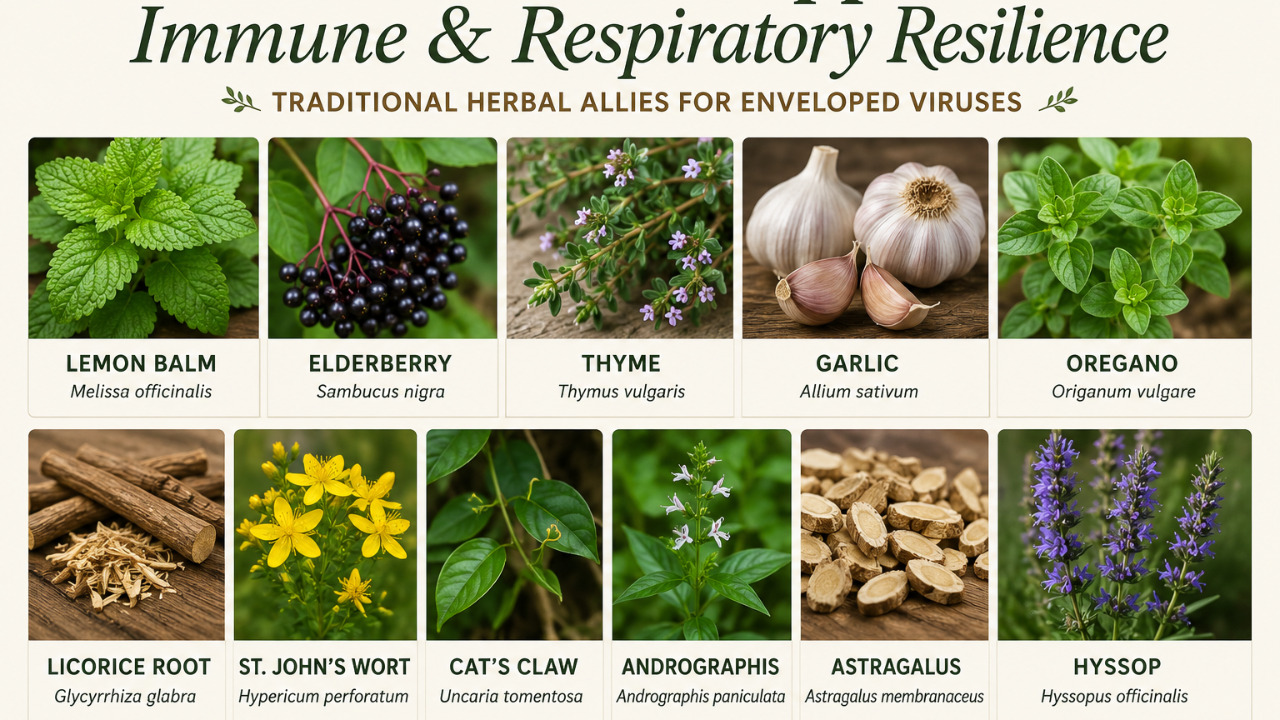
Herbs like lemon balm, elderberry, thyme, garlic, oregano, and licorice have long histories of supporting the body during viral stress while also helping regulate inflammation, support respiratory health, and strengthen the immune response.
There’s also emerging laboratory research exploring how compounds in herbs like St. John’s wort, cat’s claw, andrographis, astragalus, and hyssop may interact with enveloped viruses or support immune function in meaningful ways.
Not a cure. Not a replacement for medical care. But intelligent, traditional, evidence-informed support.
And it’s important to remember that most infections tend to hit harder when the body is already under strain. Chronic stress, poor sleep, nutrient depletion, inflammation, and an overwhelmed nervous system can all affect how resilient we are when illness shows up.
Focus on sleep, minerals, hydration, and nervous system support. Remember, when we’re chronically stressed, cortisol becomes dysregulated, and that can contribute to excess inflammation in the body. And inflammation is one of the biggest concerns with hantavirus.
Now, this may never reach our doorsteps. 🤞🏽 But anytime there’s an outbreak of anything, it always inspires me to think about whether I already have the tools, nourishment, and herbs in place that can help support my body if stress or illness does arise.
I say this all the time: herbalism always teaches us to stay ready so we don’t have to get ready.
And listen, during Covid, we leaned heavily on rest, hydration, nourishment, and herbal support in our household, and thankfully our experience ended up being mild. That experience reinforced for me how important it is to already have supportive practices in place urgent moments arrive.
That doesn’t mean herbs are a cure for hantavirus, and they’re not a replacement for medical care. But it does mean we can support the body intelligently instead of waiting for someone to save us.
Your immune system is not separate from how you live every day.
Here's what some of the research says:
St. John's Wort has been shown in research to directly inhibit enveloped virus particles — including SARS-CoV-2 and its variants — through a compound called hypericin. Laboratory studies suggest hypericin acts directly on the viral envelope, making it harder for the virus to enter cells.
Cat's Claw (Uncaria tomentosa) has demonstrated antiviral activity against SARS-CoV-2 and other enveloped RNA viruses in laboratory studies, with one 2024 study showing over 90% antiviral activity against chikungunya virus. Its oxindole alkaloids are also known immune modulators.
Andrographis — a powerhouse in Ayurvedic and traditional Chinese medicine — has been studied against HIV, hepatitis C, influenza, and dengue, all enveloped viruses. Its primary mechanism appears to be inhibiting viral adsorption and replication at the host cell level.
Astragalus continues to be one of my favorites for deep immune resilience. Its polysaccharides have shown immune-enhancing and antiviral activity in studies focused on herpes viruses, hepatitis C, and influenza.
Hyssop is a traditional respiratory herb with in vitro studies showing it inhibits the replication of enveloped viruses. Given that Andes virus targets the lungs, having respiratory support herbs on hand is especially relevant.
It's never too late to make fire cider
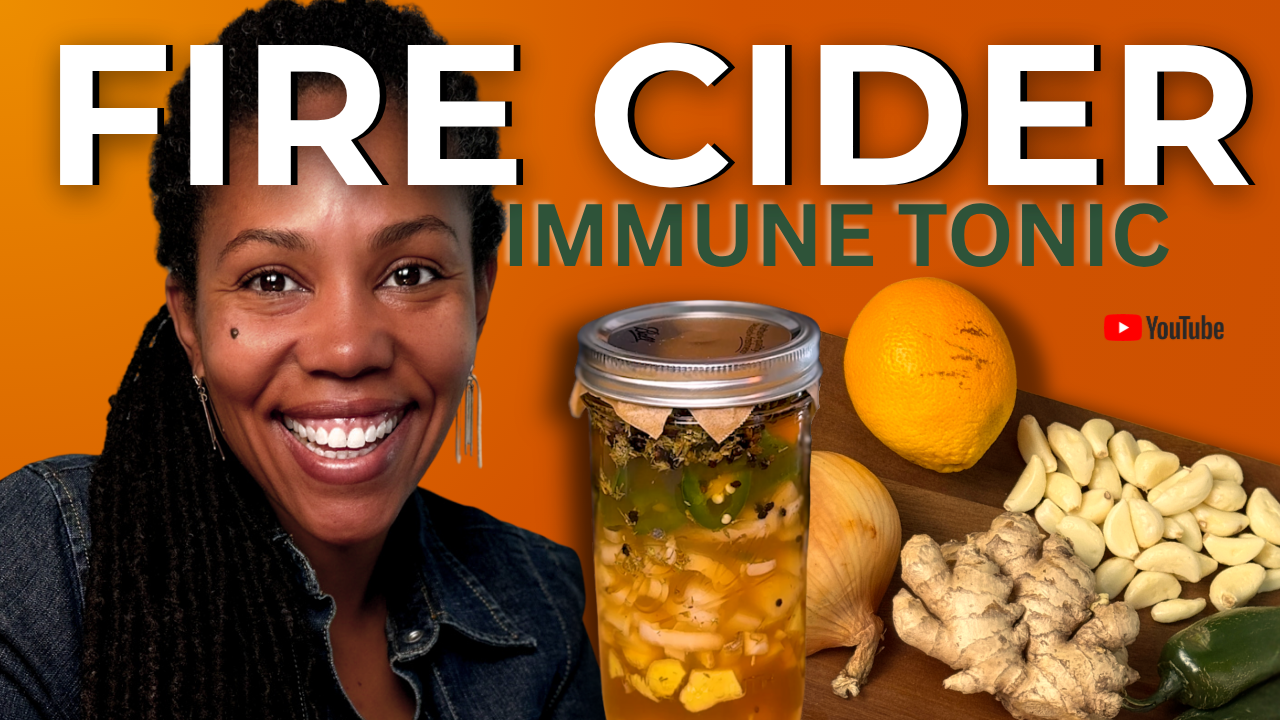
Tami asked if we were ready. This is part of my answer. 🌿 Fire cider has been a staple in our house for over a decade. It's one of the simplest tonics you can make with kitchen ingredients: garlic, ginger, turmeric, horseradish, apple cider vinegar, and more, all in one bottle. It's anti-inflammatory, immune-supportive, especially helpful for viral support, keeps for months and is delicious! Make a batch this weekend. 🔥 Video tutorial here.
References
Astani, A., Reichling, J., & Schnitzler, P. (2023). Antiviral potential of Melissa officinalis L.: A literature review. Plants, 12(2). https://pmc.ncbi.nlm.nih.gov/articles/PMC9841880/
Balasundram, V., Ibrahim, N., & Kasmuri, A. (2021). Andrographis paniculata (Burm. F) Wall ex Nees: Antiviral properties and mechanisms of action. Phytotherapy Research. https://onlinelibrary.wiley.com/doi/10.1002/ptr.7145
Calderón, A.I., et al. (2024). Antiviral and virucidal activities of Uncaria tomentosa (cat's claw). PubMed. https://pubmed.ncbi.nlm.nih.gov/38543735/
Centers for Disease Control and Prevention. (2026, May 10). 2026 Multi-country hantavirus cluster linked to cruise ship. Health Alert Network. https://www.cdc.gov/han/php/notices/han00528.html
Gotte, B., et al. (2024). Hyperforin, the major metabolite of St. John's wort, exhibits pan-coronavirus inhibitory activity. Frontiers in Microbiology. https://www.frontiersin.org/journals/microbiology/articles/10.3389/fmicb.2024.1443183/full
Mocanu, M. L., & Amariei, S. (2022). Elderberries-A Source of Bioactive Compounds with Antiviral Action. Plants (Basel, Switzerland), 11(6), 740. https://doi.org/10.3390/plants11060740
Sadgrove, N.J., et al. (2022). Hyssopus essential oil: An update of its phytochemistry, biological activities, and uses. Molecules, 27(2). https://pmc.ncbi.nlm.nih.gov/articles/PMC8776447/
Shi, L., et al. (2021). Antiviral activities of andrographolide and its derivatives: A review. Frontiers in Pharmacology. https://pmc.ncbi.nlm.nih.gov/articles/PMC8619093/
Vial, P. A., et al. (2006). Incubation period of hantavirus cardiopulmonary syndrome. Emerging Infectious Diseases, 12(8). https://pmc.ncbi.nlm.nih.gov/articles/PMC3291207/
World Health Organization. (2026, May 7). Hantavirus cluster linked to cruise ship travel, multi-country. Disease Outbreak News. https://www.who.int/emergencies/disease-outbreak-news/item/2026-DON600
Yepes-Pérez, A. F., et al. (2021). The hydroalcoholic extract of Uncaria tomentosa (cat's claw) inhibits SARS-CoV-2 infection at an early step of the replication cycle. Frontiers in Microbiology. https://pmc.ncbi.nlm.nih.gov/articles/PMC7929665/