
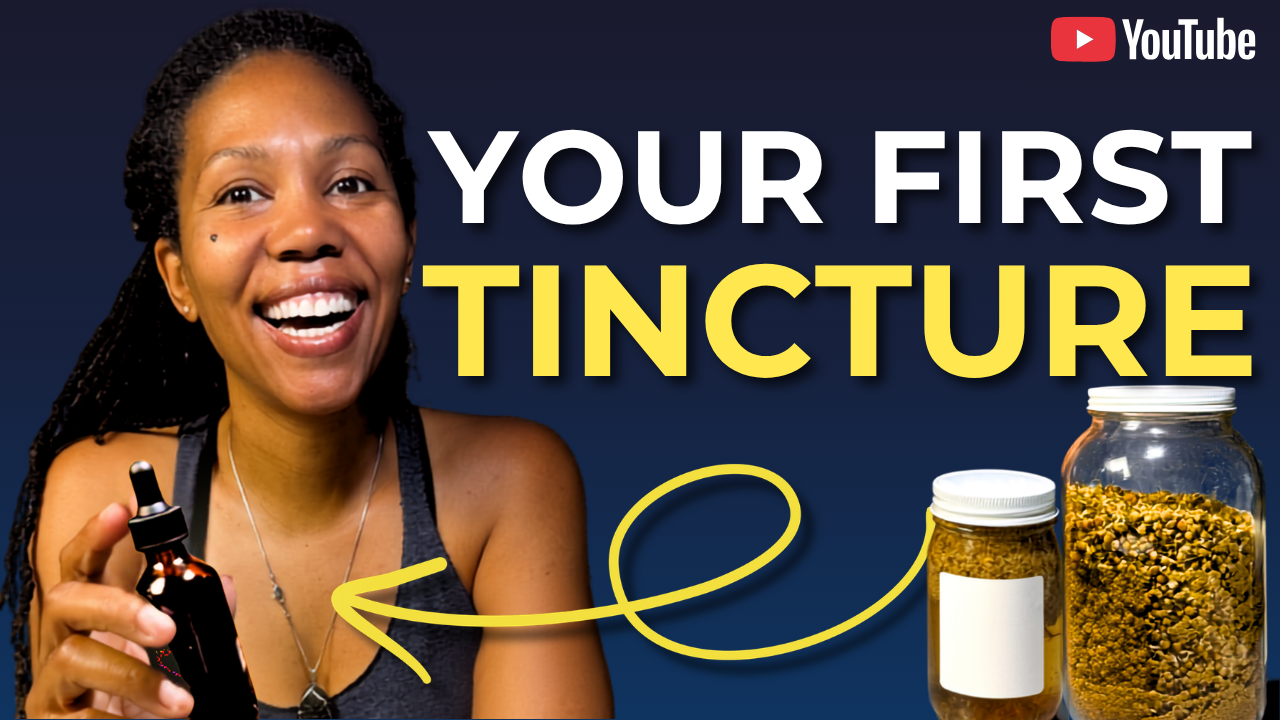
How to Make a Chamomile Tincture (A Simple Beginner Guide)
Jun 21, 2026You have been wanting to make your own herbal tincture, but every time you look it up, it gets complicated. Ratios, percentages, words you have never seen before, and suddenly it feels like you need a degree just to fill a jar.
You do not.
If you are new to herbs, building an herbal medicine stash for your family, or you have been meaning to start and keep putting it off, this is where you begin. Learning how to make a tincture with dried herbs is one of the simplest, most useful skills in home herbalism. One herb. One jar. Alcohol. About five minutes of real work, and then time does the rest.
In the full video walkthrough, I show you the whole process start to finish using chamomile, including the one mistake most beginners make in the first 24 hours that can quietly ruin the entire batch. This post will give you the foundation. The video shows you exactly how it is done, step by step, so you can follow along with your own jar in hand.
Watch the full tincture tutorial here
What a Tincture Actually Is
A tincture is a plant extraction. You are pulling the medicinal compounds out of the herb and into a liquid your body can absorb easily. That liquid is called the menstruum, and it does two jobs at once. It extracts the medicine, and it preserves it.
Here is why a tincture earns its place on your shelf. A properly made and stored alcohol tincture will last for years. A tea is wonderful, but you have to remake it every single time. With a tincture, you make one batch, and it is ready the moment you need it, no waiting, no steeping, no scrambling.
That difference is bigger than it sounds, and once you feel it in your own home, you understand why herbalists keep tinctures within reach. In the video, I explain what makes alcohol such a reliable solvent and why the right percentage matters more than most beginners realize.
Why Chamomile Is the Right Herb to Start With
Chamomile is one of my favorite herbs to reach for, and I come back to it again and again. We keep a gallon of chamomile tincture in our house. That is how much we rely on it.
There is a story behind that gallon, one involving a wailing toddler, a frazzled mother, and the herb that brought our whole house back to calm. I tell it in full in the video, because it is the reason chamomile became the herb I trust most for my own family.
What matters for you is what chamomile does in the body. It is a nervine, which means it supports the nervous system, and it is wonderful for stress, restlessness, and that wound-up feeling at the end of the day. It is also a carminative and digestive, so it helps with gas, bloating, cramping, and acid reflux. It is gentle enough for the whole family with the right preparation, yet you will still feel it working. That combination, gentle but noticeable, is exactly what you want when you are new to herbs and still learning to trust the plants.
What You Need
The beauty of the folk method is how little it asks of you. Three things, and that is it.
Dried chamomile flowers. Loose-leaf and dried, not fresh. The process changes when you work with fresh plants, and that is a video of its own.
A clean glass jar with a lid. A standard mason jar is perfect. Now you know why herbalists keep old jars all over the house.
Alcohol. This is where most beginners get nervous, and where the wrong choice can leave you with a tincture that will not keep. There is a simple rule for what proof to use with dried herbs, and I show you exactly what to buy, and the alcohol-free options if you need them, in the video. Get this part right and everything else falls into place.
The Folk Method
The folk method is the traditional way herbalists have made tinctures at home for generations. The shape of it is simple. You fill your jar with herb, cover it completely with alcohol, label it, and let it sit in a cool dark place for four to six weeks, shaking it every day or two while the alcohol slowly pulls the medicine out of the plant.
That is the overview. The details are where people stumble, and they are easier to watch than to read. How full to pack the jar. How much alcohol to add and how far above the herb it needs to sit. What the ratio actually means and why you write it on the label. I walk through all six steps on camera so you can see each one as you do it.
See the full step-by-step in the video
The One Mistake That Can Ruin Your Batch
This is the part I do not want you to miss, because it catches almost every beginner, and it happens in the first 24 hours.
Chamomile flowers absorb liquid, a lot of it. Something happens to the herb overnight that, if you do not catch it and fix it, can let mold take hold and cost you the whole jar. It is simple to prevent once you know to look for it, and it takes about ten seconds.
I show you exactly what to watch for, and the quick fix that saves the batch, in the video. If you make only one tincture this year, this is the part worth watching before you start.
What Comes After the Wait
After four to six weeks, your tincture is ready to strain and bottle, and there is a right way to do it that gets every last drop of medicine out of the plant. What you end up with is a golden amber liquid, floral and slightly sweet, that tells you at a glance you did it right. I show the straining, the bottling, and what a finished chamomile tincture should look and smell like in the video.
Then there is dosing. Knowing how to make a tincture is only half the skill. Knowing how much to take, how often, and when is the other half, and it is especially important when you are working with children or other family members. I cover adult and children's dosing in the video, and if you want to go deeper, I have a full herbal dosage workshop that walks through it for the whole family.
Where to Go Next
The folk method is slow, simple, and reliable, and it is the right place to start. But it is not the only way. Once you are comfortable, you can speed things up. If you do not want to wait four to six weeks, the percolation method lets you make a finished tincture in a single day.
Here is the truth. You are not someone who buys tinctures because making them seems complicated. You are someone who makes them. That shift, from buying to making, is the beginning of a real home herbal practice.
Start with the full tutorial here, then come back to this post whenever you need a refresher.
If this is the kind of practical, grounded herbal learning you have been looking for, Family Farmacy was built for exactly this. It is for people who want to use herbs skillfully and confidently for themselves and their households, one clear skill at a time.
With joy, Selima